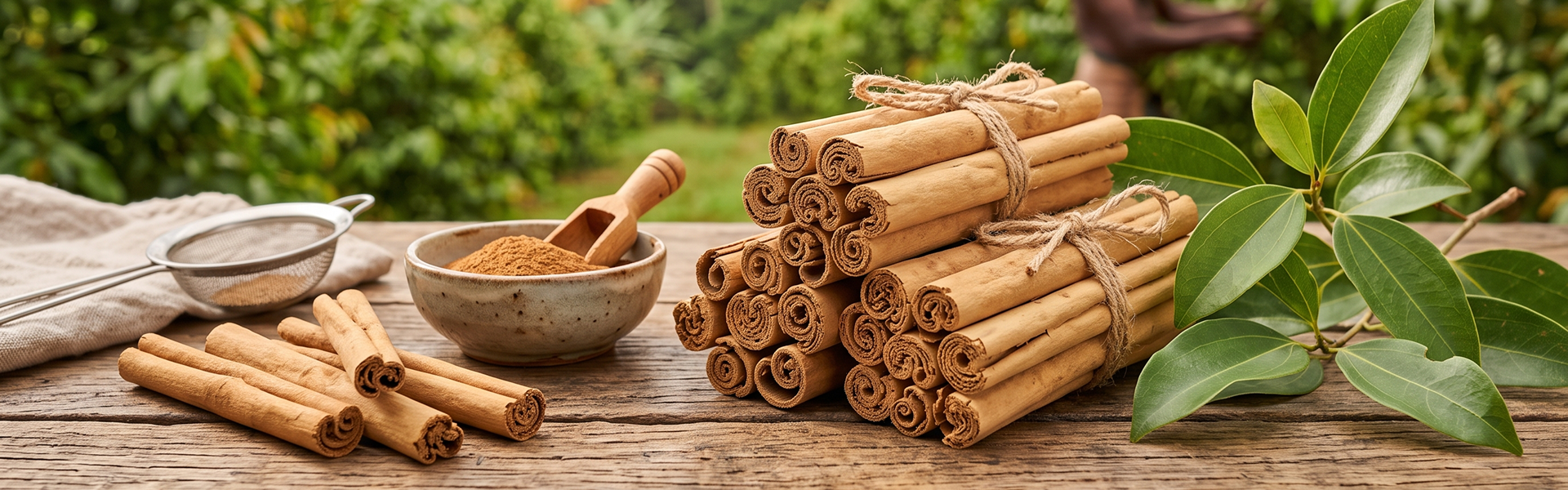

Today, cinnamon is a familiar spice found in kitchens and products around the world. But for much of history, the story was very different. Back then, Cinnamon was a prized possession that was enjoyed by royalty and the wealthy as its true origin remained a closely guarded mystery.
Cinnamon was already known in ancient Egypt as far back as 2000 BC. It was valued not only as a spice, but also for religious and traditional uses, making it part of the rituals and customs of the ancient world. Its rarity and value gave it a status far beyond that of an ordinary household spice.
Beyond Egypt, Cinnamon was also introduced to the Greeks, Romans and the other cultures of ancient Mediterranean world, through Arab traders. Knowing the valued cinnamon was in the Mediterranean world, the Arab traders deliberately kept its origins guarded secret. Over time, stories emerged to explain its mysterious origin. One such famous legend is that Cinnamon sticks were obtained from giant bird nests, which were built from those cinnamon sticks gathered from distant lands. These stories made cinnamon to look like a rare and difficult to obtain, cementing its high value for centuries.
As its popularity grew, people also began to recognise that not all cinnamon was the same. There was a finer, lighter and more delicate form, alongside darker varieties with a stronger, more intense character. The finer variety became known as “True Cinnamon”, while darker, stronger varieties became known as “Cassia”.
Eventually, the mystery began to slowly unravel once the European maritime explorations began. When the Portuguese arrived in Sri Lanka in 1505, they realised that they had reached the source of the highly prized cinnamon they had been seeking. From there onwards, the control of the cinnamon trade became a major commercial incentive for controlling the island's coastal areas and trade routes.
As European powers expanded their control over Sri Lanka, the fine, light and delicate cinnamon grown on the island became known to the world as Ceylon Cinnamon. The mystery surrounding its source had finally been broken, ending a secret that had helped make cinnamon one of the most prized commodities in international trade. The spice gradually moved from being a luxury of the wealthy to becoming a familiar ingredient in homes around the world. However, Ceylon Cinnamon continues to be valued around the world for its distinctive flavour, delicate character and limited availability.
Today, the mystery of where cinnamon comes from has long been solved. Yet its history remains part of what makes Ceylon Cinnamon so distinctive. Behind a spice that may seem ordinary lies a story of secrecy, legend, trade and a small island that became known as the home of “True Cinnamon”.