Think you know what cinnamon is? The cinnamon you use every day may not be the “True Cinnamon” that gave the spice its name.
What we commonly call cinnamon comes mainly from two distinct types: Ceylon Cinnamon, often known as “True Cinnamon”, and Cassia. Both are used as cinnamon, but they differ considerably in appearance, texture, flavour and natural composition.
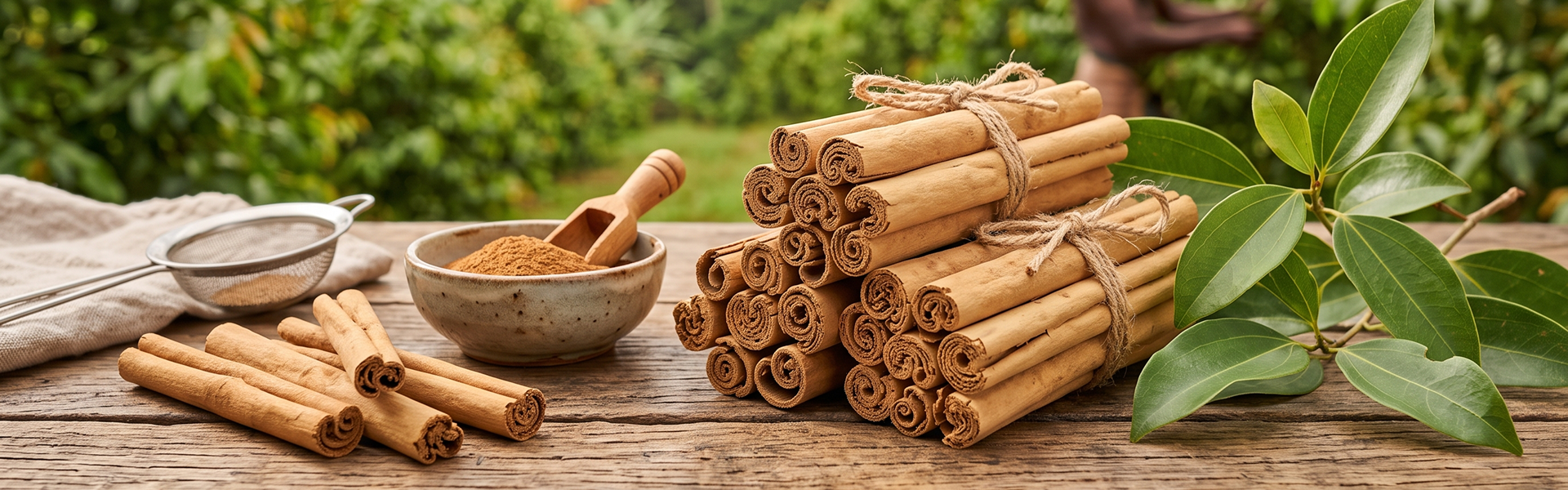
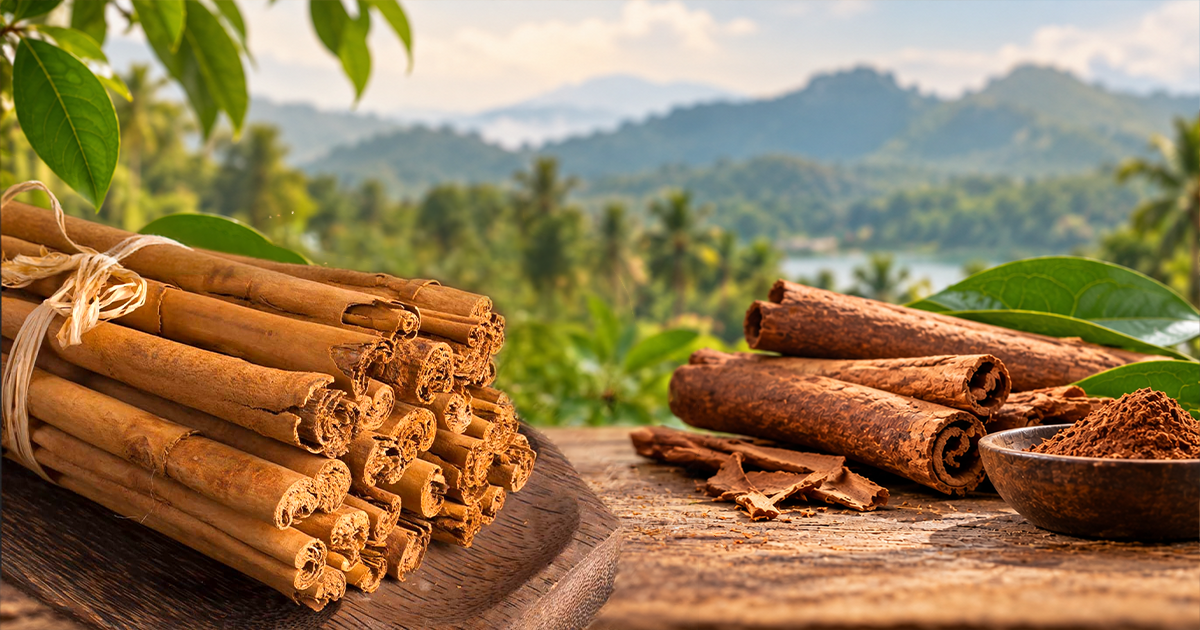
Ceylon Cinnamon is known for its fine, delicate structure. Its quills are made from several thin layers of inner bark, giving them a lighter colour and a fragile, paper-like appearance. Its flavour is mild, subtly sweet and refined, with a delicate aroma that does not overpower other ingredients. Cassia, in comparison, generally has a darker colour, thicker bark and a stronger, more intense flavour.
These differences are more than simply a matter of appearance or taste. Ceylon Cinnamon and Cassia also differ significantly in their coumarin content.
Coumarin is a naturally occurring compound found in several plants, including cinnamon. While small amounts are not generally a concern, consuming high amounts of coumarin over time can place a strain on the liver, particularly in people who are sensitive to it. Cassia generally contains considerably more coumarin than Ceylon Cinnamon, while Ceylon Cinnamon contains only very small amounts. This is why Ceylon Cinnamon can be a preferable choice for people who use cinnamon frequently or consume it in larger quantities.
So, what makes Ceylon Cinnamon different? It is the combination of its delicate character and naturally low coumarin content. From its fine, layered quills to its subtle flavour and aroma, Ceylon Cinnamon offers a distinctive experience that sets it apart from the stronger character of Cassia.
For centuries, this distinctive cinnamon has been associated with the island of Sri Lanka. Today, it remains known around the world as “True Cinnamon” — Ceylon Cinnamon.